
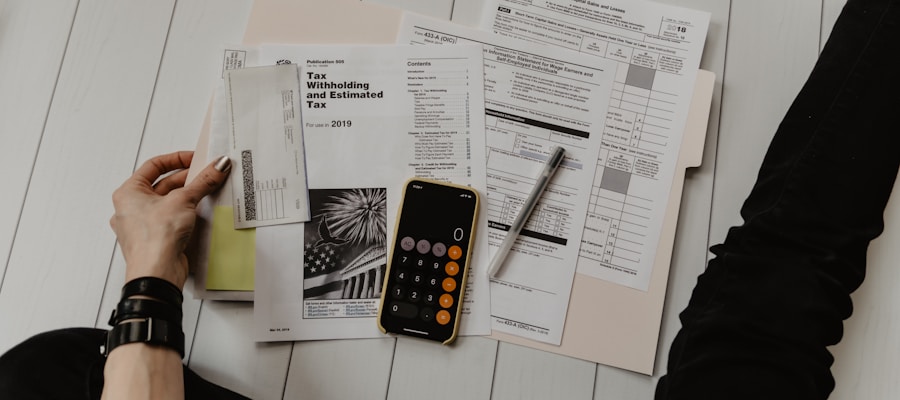
Unlike stocks, collectibles are not subject to the wash sale rule under IRC §1091. This means a collector holding an investment-grade collectible at a loss can sell it, claim the capital loss, and repurchase the same or similar item without triggering the wash sale disallowance that applies to stocks and securities.
- IRC §1091 wash sale rule applies ONLY to “shares of stock” and “securities” — not collectibles
- Collectible losses offset collectible gains first, then other capital gains, then up to $3,000 ordinary income (§1211(b))
- Losses are only deductible on INVESTMENT property — personal-use losses are nondeductible (§165(c))
- Hobby losses are also nondeductible post-TCJA (§67(g))
This article contains affiliate links. See our affiliate disclosure.
Tax loss harvesting — the practice of selling assets at a loss to generate deductible capital losses — is a well-known concept in the stock market. What is less widely understood is that collectibles have a structural advantage over stocks and securities when it comes to loss harvesting. The reason is the wash sale rule under IRC §1091, which restricts loss harvesting for stocks and securities but does not apply to collectibles. This article explains how the wash sale rule works, why it does not apply to collectibles, how collectible losses offset gains under the Internal Revenue Code, and what documentation is required to claim a loss.
What Is Tax Loss Harvesting?
Tax loss harvesting is the sale of an asset at a price below its cost basis, generating a capital loss. That capital loss offsets capital gains realized during the same tax year. If total capital losses exceed total capital gains, up to $3,000 of the net loss ($1,500 for married filing separately) can be deducted against ordinary income under IRC §1211(b). Any remaining excess loss carries forward to future tax years under IRC §1212.
In the stock market, tax loss harvesting is common at year-end. An investor sells a stock position at a loss, claims the loss on their tax return, and then repurchases a similar (but not “substantially identical”) security after waiting 30 days. The 30-day waiting period exists because of the wash sale rule under IRC §1091, which disallows the loss if the investor repurchases substantially identical stock or securities within 30 days before or after the sale.
For collectibles, the rules are different. The wash sale rule’s statutory language limits its application to stocks and securities. Collectibles — coins, trading cards, art, wine, precious metals held outside financial accounts, stamps, and other tangible personal property — fall outside this definition. This distinction creates a structural difference in how loss harvesting works for collectibles compared to stocks.
The significance of this distinction is straightforward: a stock investor who sells at a loss and repurchases the same stock within 30 days loses the deduction. A collectibles investor who sells at a loss and repurchases the same item the following day does not lose the deduction, because the wash sale rule does not apply to the transaction.
The Wash Sale Rule Does Not Apply to Collectibles
IRC §1091(a) provides: “In the case of any loss claimed to have been sustained from any sale or other disposition of shares of stock or securities, where it appears that, within a period beginning 30 days before the date of such sale or disposition and ending 30 days after such date, the taxpayer has acquired… substantially identical stock or securities… then no deduction shall be allowed.”
The operative phrase is “shares of stock or securities.” The statute does not reference “property” generally, “capital assets,” or “collectibles.” It is limited to stock and securities by its plain text.
What qualifies as “securities” under §1091? The term “securities” is not comprehensively defined in §1091 itself, but in the context of the wash sale rule it has been interpreted to include bonds, notes, debentures, and similar financial instruments. It does not include tangible personal property such as collectibles. Gold coins, baseball cards, fine art, wine, stamps, and similar items are tangible personal property — not securities.
Precious metals ETFs are different. Shares of a gold ETF (such as GLD or IAU) are shares of stock in a trust, and the wash sale rule applies to them. Physical gold coins and bars are not shares of stock. This distinction matters for collectors who hold both physical metals and ETF shares. For more on ETF tax treatment, see our Gold ETF Tax Guide.
Cryptocurrency and NFTs. Under current law (as of 2026), the IRS treats cryptocurrency as property, not as stock or securities. The wash sale rule therefore does not apply to cryptocurrency under the current statutory text. However, the Infrastructure Investment and Jobs Act of 2021 and subsequent legislative proposals have included provisions that would extend the wash sale rule to digital assets. As of this writing, no such extension has been enacted into law. NFTs (non-fungible tokens) are also treated as property and are not subject to the wash sale rule under current law.
Proposed legislation. Various bills introduced in Congress have proposed expanding the wash sale rule to cover digital assets and, in some proposals, all capital assets. None of these proposals have been enacted as of the date of this article. The current statutory text of IRC §1091 continues to apply only to shares of stock and securities.
The practical implication is that a collector who sells a PSA 10 1st Edition Base Set Charizard at a loss can repurchase an identical PSA 10 1st Edition Base Set Charizard the same day — or even from the same buyer — and the loss remains fully deductible, provided the item was held as an investment. A stock investor who attempts the same transaction with shares of Apple stock would have the loss disallowed under the wash sale rule.
How Collectible Losses Offset Gains
Capital losses on collectibles follow the same general loss netting rules that apply to all capital assets, with specific ordering rules under IRC §1(h) and §1211(b). Understanding the hierarchy is important because collectibles occupy their own rate category within the capital gains framework.
Step 1: Offset gains within the same category. Long-term collectible losses first offset long-term collectible gains. If a collector has $10,000 in long-term collectible gains and $6,000 in long-term collectible losses during the same tax year, the net collectible gain is $4,000, taxed at up to 28% under IRC §1(h).
Step 2: Offset other capital gains. If collectible losses exceed collectible gains, the excess long-term loss flows through the netting process under IRC §1(h) and can offset other categories of capital gain. Excess net long-term losses from the 28% group offset gains in other long-term categories (such as the 20%/15%/0% categories for stocks and real estate). The specific netting order is prescribed by the rate group stacking rules in IRC §1(h).
Step 3: Offset short-term gains. If net long-term capital losses (including collectible losses) exceed all long-term capital gains, the remaining loss offsets short-term capital gains.
Step 4: Deduct against ordinary income. Under IRC §1211(b), if total capital losses exceed total capital gains, up to $3,000 of the net capital loss ($1,500 for married filing separately) can be deducted against ordinary income (wages, salary, business income, etc.).
Step 5: Carry forward. Any capital loss in excess of the amounts that can be used in the current year carries forward to the next tax year under IRC §1212. The carryforward retains its character as long-term or short-term. There is no expiration on capital loss carryforwards for individuals — they carry forward indefinitely until used.
The loss hierarchy means that collectible losses are most tax-efficient when they offset collectible gains taxed at 28%. A $10,000 collectible loss that offsets a $10,000 collectible gain eliminates up to $2,800 in federal tax. The same $10,000 loss applied against stock gains taxed at 15% eliminates only $1,500 in federal tax. And $3,000 of loss applied against ordinary income produces a tax benefit at the taxpayer’s marginal ordinary income rate, which varies by bracket.
Investment vs Personal Use: The Critical Distinction
Not all collectible losses are deductible. The deductibility of a loss depends on how the property was held — as an investment, in a trade or business, or for personal use.
Investment property (§165(c)(2)). Losses on property held for the production of income are deductible under IRC §165(c)(2). A collector who holds items primarily for appreciation — with the intent and expectation of profit — holds those items as investments. Losses on the sale of investment collectibles are capital losses, deductible under the rules described above.
Business property (§165(c)(1)). Losses on property used in a trade or business are deductible under IRC §165(c)(1). A collectibles dealer (someone who buys and sells collectibles as a trade or business, reporting on Schedule C) can deduct losses on inventory as ordinary business losses, not capital losses. For dealers, the capital loss limitations of §1211 do not apply because the items are inventory, not capital assets, under IRC §1221(a)(1).
Personal-use property. Losses on property held for personal use — items purchased for enjoyment rather than investment — are not deductible. IRC §165(c) limits loss deductions to the categories listed in subsections (1) through (3). Personal-use property does not fall within any of these categories (with the limited exception of casualty losses in federally declared disasters under §165(h)(5)). A collector who purchased a painting purely for display in their home and sells it at a loss cannot deduct that loss.
Hobby activity (§67(g)). Under the Tax Cuts and Jobs Act of 2017, miscellaneous itemized deductions subject to the 2% AGI floor were eliminated through 2025 under IRC §67(g). This provision was extended through 2028 in subsequent legislation. Hobby expenses — including losses from an activity not engaged in for profit under IRC §183 — are not deductible during this period. Hobby income, however, remains fully taxable as ordinary income. The result is that a hobbyist collector reports all gains as income but cannot deduct losses. For the distinction between hobby, investor, and dealer status, see our Dealer vs Investor vs Hobbyist guide.
The investment vs. personal-use distinction is determined by the taxpayer’s primary purpose for holding the item. The IRS examines the facts and circumstances, including how the item was acquired, whether it was displayed or stored, whether the taxpayer tracked market values, and whether the taxpayer has a pattern of buying and selling similar items. Documentation of investment intent — such as maintaining cost basis records, tracking market values, and storing items in protective holders or climate-controlled environments — supports investment classification.
Worked Examples
Example A: Collectible Loss Offsets Collectible Gain
| Collector sells 5 PSA-graded cards for combined loss of | ($4,000) |
| Collector also sells gold coins for gain of | $4,000 |
| Net collectible gain/loss | $0 |
| Federal tax on collectible gains | $0 |
The $4,000 long-term collectible loss offsets the $4,000 long-term collectible gain. The collector has no net gain and owes no tax on the collectible transactions. Both items were held as investments for more than one year.
Example B: Losses Only — Ordinary Income Offset
| Collector sells investment cards at a combined loss of | ($4,000) |
| No capital gains during the year | $0 |
| Deductible against ordinary income (§1211(b)) | ($3,000) |
| Excess loss carried forward to next year (§1212) | ($1,000) |
With no capital gains to offset, $3,000 of the loss offsets ordinary income (e.g., wages). The remaining $1,000 carries forward and is available to offset capital gains or ordinary income in the following year. The carryforward retains its long-term character.
Example C: Immediate Repurchase (No Wash Sale for Collectibles)
| Collector purchased PSA 10 1st Ed Base Set Charizard for | $300,000 |
| Current market value declined to | $220,000 |
| Collector sells the card for $220,000 — realized loss | ($80,000) |
| Collector repurchases the same card (or identical copy) the next day for | $220,000 |
| Loss disallowed under wash sale rule (§1091)? | No — §1091 does not apply to collectibles |
| Deductible capital loss | $80,000 |
The collector still owns the same card (or an identical copy). The $80,000 loss is fully recognized. The new cost basis in the repurchased card is $220,000. If this were stock, the $80,000 loss would be disallowed under the wash sale rule because the repurchase occurred within 30 days. For collectibles, the wash sale rule does not apply.
In Example C, the collector’s economic position after the transaction is identical to before — they hold the same card. However, for tax purposes, the collector has recognized an $80,000 loss that can offset gains, and the new cost basis resets to the repurchase price. If the same collector had $80,000 in collectible gains from other sales during the year, the loss fully offsets those gains, resulting in $0 net collectible gain and no collectibles tax owed on those transactions.
Year-End Timing
For a capital loss to be claimed on a given tax year’s return, the sale must be completed during that calendar year. For individual taxpayers (calendar-year filers), this means the sale must occur on or before December 31.
When is a sale “complete”? For collectibles sold through private transactions, the sale is complete when the collectible is delivered and payment is received (or when the risks and benefits of ownership transfer). For collectibles sold through auction houses, the sale date is generally the auction date, not the later settlement date when funds are disbursed. For items sold on eBay, StockX, Whatnot, or similar platforms, the sale date is the date the transaction is completed (item shipped and confirmed).
Consignment considerations. If a collectible is consigned to an auction house or dealer for sale, the timing of the sale depends on when the item actually sells, not when it is consigned. A collectible consigned in November but not auctioned until January is a sale in the following tax year. Collectors who are harvesting losses near year-end need to account for auction schedules and settlement timelines.
Platform processing times. Online marketplace sales (eBay, StockX, Whatnot, PWCC) may have processing and settlement periods. The sale date for tax purposes is the date the transaction is binding — typically when the buyer pays and the seller ships. Collectors harvesting losses in late December need to ensure the sale completes before January 1.
There is no rule requiring loss harvesting to occur in December. A loss recognized in any month of the tax year is a loss for that tax year. However, loss harvesting is frequently done in the fourth quarter because the taxpayer has better visibility into their total capital gains for the year and can determine how much loss is needed to offset those gains.
Record Keeping for Claimed Losses
Claiming a capital loss on the sale of a collectible requires the same documentation as reporting a gain. The IRS may request supporting evidence during an examination. The following records support a claimed loss:
Cost basis documentation. The original purchase price (cost basis) must be established with evidence. This includes purchase receipts, auction invoices, credit card statements, bank records, or platform transaction histories (eBay purchase records, StockX receipts, etc.). Without basis documentation, the IRS may assign a $0 basis, converting the entire sale price into a gain. For a comprehensive guide to establishing and tracking basis, see our Cost Basis for Collectors guide and Cost Basis Tracker tool.
Sale documentation. Records of the sale include the sale receipt or invoice, platform transaction records, auction settlement statements, and any correspondence related to the sale. The sale price, date, and buyer identity (if a private sale) should all be documented.
Investment intent. Because losses on personal-use property are nondeductible, a collector claiming a loss should be prepared to demonstrate that the item was held as an investment. Evidence of investment intent includes: maintaining cost basis records, tracking market values over time, storing items in protective holders or graded slabs, insuring the collection, and a pattern of buying and selling similar items. The absence of personal enjoyment is not required — an item can be both enjoyed and held as an investment — but the primary purpose must be investment to claim a loss.
Form 8949 and Schedule D. Losses are reported on Form 8949 (Sales and Other Dispositions of Capital Assets) and flow to Schedule D. Each sale is reported individually with the description, acquisition date, sale date, proceeds, basis, and gain or loss. Long-term collectible losses (held more than one year) are reported in Part II of Form 8949. Short-term losses (held one year or less) are reported in Part I.
Tax software like E-file.com and FreeTaxUSA
handle Schedule D, Form 8949, and capital loss carryforward calculations.
Frequently Asked Questions
No. IRC §1091 applies only to “shares of stock” and “securities.” Collectibles such as coins, trading cards, art, wine, and other physical assets are not stocks or securities and are therefore not subject to the wash sale rule. A collector can sell a collectible at a loss and repurchase the same or a substantially identical item without the loss being disallowed.
Under IRC §1211(b), up to $3,000 of net capital losses ($1,500 for married filing separately) can be deducted against ordinary income per year. Losses in excess of this amount carry forward to future tax years under IRC §1212. Capital losses first offset capital gains before applying against ordinary income.
No. Under IRC §165(c), losses are deductible only on property held for investment (§165(c)(2)) or in a trade or business (§165(c)(1)). Losses on personal-use property are not deductible. If a collector sells a personal-use collectible at a loss, that loss has no tax benefit.
Yes. Long-term collectible losses offset long-term collectible gains first, but excess losses can then offset other long-term capital gains (such as stock gains), then short-term capital gains, and finally up to $3,000 of ordinary income per year under IRC §1211(b). The loss netting rules under IRC §1(h) apply across all capital asset categories.
Estimate your collectibles tax
Enter your purchase price, sale price, holding period, state, and income to see what the IRS collectibles rate means for your situation.
Open the Calculator →Filing Collectible Sales?
Tax software that handles Schedule D and Form 8949 for collectibles:
Compare all tax software options · Estimate your tax first
Affiliate links — we may earn a commission at no cost to you. Disclosure
✓ Tax analysis reviewed for accuracy · Sources verified against IRS.gov