
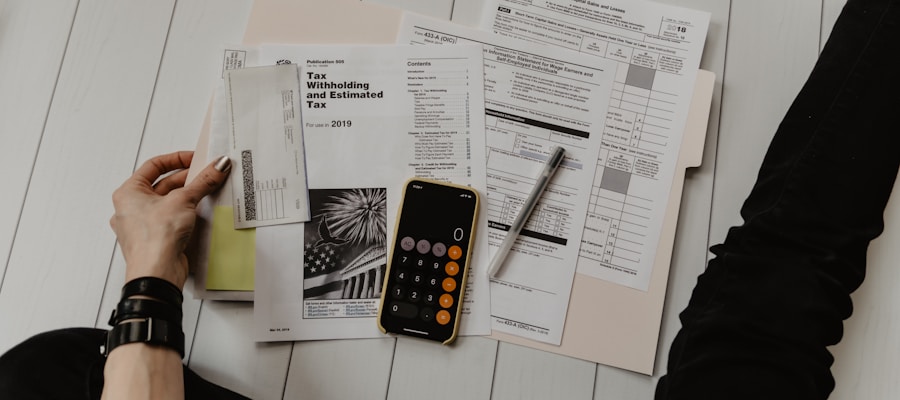
The IRS uses 9 factors from Treas. Reg. §1.183-2(b) to classify collecting as a hobby or business. Since the TCJA suspended hobby expense deductions under §67(g), the classification has significant tax consequences: business sellers deduct expenses on Schedule C but owe self-employment tax; hobby sellers pay tax on income but cannot deduct any expenses.
- The IRS 9-factor test evaluates profit motive, not just profit
- Post-TCJA: hobby income is taxable but hobby expenses are NOT deductible (§67(g))
- Business sellers report on Schedule C with full expense deductions but owe 15.3% SE tax
- The 3-of-5 year profit presumption (§183(d)) creates a rebuttable presumption of business activity
- The 28% collectibles rate applies to investor gains (Schedule D) — business income is ordinary income on Schedule C
This article contains affiliate links. See our affiliate disclosure.
The distinction between a hobby and a business is one of the most consequential tax classifications for collectors who buy and sell. Under IRC §183, activities “not engaged in for profit” — commonly referred to as hobbies — are subject to a different set of tax rules than activities that qualify as a trade or business under IRC §162. The IRS does not provide a bright-line rule or single test for making this determination. Instead, Treas. Reg. §1.183-2(b) sets out 9 factors that the IRS and the Tax Court weigh in evaluating whether an activity is engaged in for profit. No single factor is determinative, and the weight given to each factor varies based on the facts and circumstances of each case.
This guide explains each of the 9 factors as they apply to collectors, the tax consequences of each classification, and the reporting requirements for both hobby and business activity. It also covers the 3-of-5 year safe harbor under §183(d), the interaction with self-employment tax, and the qualified business income deduction under §199A.
Why Hobby vs Business Classification Matters After the TCJA
The Tax Cuts and Jobs Act of 2017 (TCJA), codified in part at IRC §67(g), fundamentally changed the tax landscape for hobby activities. Before 2018, taxpayers engaged in hobby activities could deduct hobby expenses as miscellaneous itemized deductions on Schedule A, subject to a 2% of adjusted gross income (AGI) floor. While this was not as favorable as full business deductions, it did provide some offset against hobby income.
The TCJA suspended all miscellaneous itemized deductions subject to the 2% AGI floor for tax years 2018 through 2025. The One Big Beautiful Bill Act (OBBBA) extended this suspension through 2028. As a result, hobby expenses — including cost of goods sold, shipping costs, platform fees, grading fees, and all other costs associated with buying and selling collectibles — are not deductible for the entire period that the suspension is in effect.
During the suspension, hobby income remains fully taxable. Under IRC §61, gross income includes “all income from whatever source derived,” and hobby income is no exception. This creates an asymmetry: a collector classified as a hobbyist who buys a card for $400 and sells it for $500 reports $500 in income (or the $100 gain, depending on whether cost of goods sold is treated as a return of capital or an expense — see below), but cannot deduct shipping, fees, or other selling expenses.
By contrast, a collector classified as operating a trade or business reports all income and expenses on Schedule C. Business expenses under IRC §162 are fully deductible, including cost of goods sold, shipping, platform seller fees, grading costs, travel to trade shows, supplies, and other ordinary and necessary business expenses. However, business classification also triggers self-employment tax under IRC §1401 at a combined rate of 15.3% (12.4% Social Security on net earnings up to the Social Security wage base, plus 2.9% Medicare on all net earnings).
The financial difference between hobby and business classification can be substantial. A collector with $30,000 in gross sales and $22,000 in total costs (inventory, fees, shipping, grading) has $8,000 in net income. As a hobby, the collector may owe tax on the full $30,000 (or a portion thereof) with no expense offset. As a business, the collector reports $8,000 in net profit on Schedule C, pays income tax on $8,000, and pays approximately $1,224 in self-employment tax ($8,000 × 92.35% × 15.3%).
The applicable statutory provisions are: IRC §67(g) (suspension of miscellaneous itemized deductions), IRC §162 (trade or business deductions), and IRC §183 (activities not engaged in for profit).
The 9-Factor Test: Treas. Reg. §1.183-2(b)
The IRS evaluates profit motive using the 9 factors enumerated in Treas. Reg. §1.183-2(b). These factors are not a checklist — no single factor is controlling, and the determination is based on the totality of the facts and circumstances. The regulation specifically states that the determination “is to be made by reference to objective standards, taking into account all of the facts and circumstances of each case.”
Factor 1: Manner in Which the Taxpayer Carries on the Activity (§1.183-2(b)(1))
This factor examines whether the taxpayer conducts the activity in a businesslike manner. The regulation states that carrying on the activity in a manner similar to other activities of the same nature that are profitable is evidence of a profit motive. Specific indicia include:
- Complete and accurate books and records. Maintaining an inventory spreadsheet that tracks each item’s purchase price, date acquired, source, grading cost, and eventual sale price. Using accounting software (QuickBooks, Wave, or a dedicated spreadsheet) to record all transactions.
- A separate bank account. Conducting all buying and selling through a dedicated business bank account rather than commingling with personal finances.
- Operating with a business plan. Having a written or documented plan that identifies the market niche, target customers, sourcing methods, and financial goals.
- Changing methods to improve profitability. Switching from retail arbitrage to wholesale sourcing after determining that margins are higher. Dropping unprofitable product lines. Adjusting pricing based on market data.
For collectors, this factor weighs toward business classification when the taxpayer tracks all purchases with receipts, maintains cost basis records for every item, uses shipping labels with tracking numbers, and treats the selling operation with the same rigor applied to any other commercial enterprise. A PSA grading operation that logs submission numbers, tracks turnaround times, records costs per card, and monitors sell-through rates demonstrates businesslike conduct.
Factor 2: The Expertise of the Taxpayer or His Advisors (§1.183-2(b)(2))
This factor evaluates whether the taxpayer has studied the activity and consulted with experts. The regulation notes that preparation for the activity by extensive study of its accepted business, economic, and scientific practices, or consultation with those who are expert therein, may indicate a profit motive. For collectors, relevant expertise includes:
- Attending trade shows, card shows, coin conventions, and industry conferences
- Reading and applying market reports from sources such as Beckett, PSA population reports, Heritage Auctions realized prices, PCGS price guides, and Artnet price databases
- Developing deep specialization in a particular niche — for example, knowledge of specific vintage Rolex references, error coins, first-edition books, or pre-war baseball card variations
- Consulting with a CPA, tax attorney, or enrolled agent regarding the tax treatment of the activity
- Obtaining professional certifications or completing courses related to authentication, grading, or appraisal
A collector who demonstrates detailed knowledge of market dynamics, pricing trends, authentication methods, and condition grading satisfies this factor more readily than a collector who buys and sells without studying the market.
Factor 3: The Time and Effort Expended by the Taxpayer (§1.183-2(b)(3))
The regulation states that the fact that the taxpayer devotes much of his personal time and effort to carrying on the activity, particularly if the activity does not have substantial personal or recreational aspects, may indicate a profit motive. This factor examines both the quantity and nature of time spent on the activity.
For collectors, relevant time includes hours spent sourcing inventory (visiting estate sales, monitoring auction listings, attending trade shows), preparing items for sale (cleaning, photographing, grading submissions), listing items on platforms, managing customer inquiries, packing and shipping orders, and maintaining records. A collector who spends 10 or more hours per week on these activities — particularly during time that could otherwise be spent on income-producing employment — demonstrates a level of commitment consistent with a business.
Running a regular live-selling schedule on platforms such as Whatnot, with consistent weekly shows requiring preparation, setup, and post-show fulfillment, is the type of recurring time commitment that supports this factor. The regulation also notes that employing competent and qualified persons to carry on the activity may support a profit motive, even if the taxpayer does not personally devote substantial time.
Factor 4: Expectation That Assets Used in the Activity May Appreciate in Value (§1.183-2(b)(4))
Under this factor, the IRS considers whether the taxpayer may profit from the appreciation of assets used in the activity, even if no current operating profit is generated. The regulation states that the term “profit” encompasses appreciation in the value of assets, including land, used in the activity.
For collectors, this factor is particularly relevant. A collector who acquires items with the expectation that they will increase in value — gold coins, rare trading cards, vintage art, limited-edition items — may be engaged in a for-profit activity even during years of operating losses. If the expected appreciation is sufficient to produce an overall profit when combined with operating income (or to offset operating losses), this factor weighs toward business classification.
However, the IRS examines whether the expectation of appreciation is based on objective market data (historical price trends, scarcity analysis, population reports) or is merely speculative. Holding items “because they might go up someday” without a basis in market analysis carries less weight than holding items based on documented price trajectories and supply constraints.
Factor 5: The Success of the Taxpayer in Carrying on Other Similar or Dissimilar Activities (§1.183-2(b)(5))
The regulation notes that the fact that the taxpayer has engaged in similar activities in the past and converted them from unprofitable to profitable enterprises may indicate a profit motive in the current activity. This factor is not limited to prior collectibles activities — prior success in any business activity may be relevant.
A collector who previously operated a successful retail business, e-commerce store, or other commercial enterprise demonstrates experience with the mechanics of running a for-profit operation. Similarly, a collector who previously operated in a different collectibles niche and generated profit (e.g., selling vintage video games before transitioning to trading cards) brings relevant prior success.
Factor 6: The Taxpayer’s History of Income or Losses with Respect to the Activity (§1.183-2(b)(6))
A series of losses during the initial or start-up stage of an activity may not indicate a lack of profit motive. However, continued losses beyond the period that is customarily necessary to bring the activity to a profitable status — when those losses are not explainable by unforeseen or fortuitous circumstances — may indicate that the activity is not engaged in for profit.
The regulation also states that a series of years in which net income was realized is strong evidence that the activity is engaged in for profit. For collectors, a pattern where revenue grows year over year — even if some years show losses — is more consistent with a developing business than a pattern of persistent, unchanging losses. A collector who loses money in years 1 and 2 while building inventory and learning the market, then generates increasing profits in years 3 through 5, shows a trajectory consistent with business development.
Factor 7: The Amount of Occasional Profits, If Any, Which Are Earned (§1.183-2(b)(7))
The regulation states that the amount of profits in relation to the amount of losses incurred, and in relation to the amount of the taxpayer’s investment and the value of the assets used in the activity, may provide useful criteria. An occasional small profit from an activity generating large losses, or from an activity in which the taxpayer has made a large investment, is not generally determinative that the activity is engaged in for profit.
However, substantial profit, even if only occasional, generally supports a profit motive. For a collector who invests $50,000 in inventory and generates $52,000 in sales for a $2,000 net profit, the profit is small relative to the investment — but its existence still indicates that the activity is capable of producing profit. If the same collector generates a $15,000 profit in one year while losing $3,000 in the following year, the substantial profit year carries weight under this factor.
Factor 8: The Financial Status of the Taxpayer (§1.183-2(b)(8))
The regulation states that substantial income from sources other than the activity (particularly if the losses from the activity generate substantial tax benefits) may indicate that the activity is not engaged in for profit. The rationale is that a taxpayer with high income from other sources may be motivated to generate deductible losses rather than actual profit from the activity.
Conversely, if the taxpayer does not have substantial income or capital from other sources, the fact that the taxpayer depends on income from the activity for living expenses indicates a profit motive. A collector whose collectibles business is a primary source of income has a stronger argument under this factor than a collector with a $300,000 salary from other employment who reports $20,000 in collectibles losses on Schedule C.
Factor 9: Elements of Personal Pleasure or Recreation (§1.183-2(b)(9))
The regulation acknowledges that the presence of personal motives in carrying on an activity may indicate that the activity is not engaged in for profit, especially when recreation or personal pleasure is involved. However, the regulation explicitly states that “the fact that the taxpayer derives personal pleasure from engaging in the activity is not sufficient to cause the activity to be classified as not engaged in for profit if the activity is in fact engaged in for profit as evidenced by other factors.”
This is particularly relevant for collectors, because collecting is inherently an activity that involves personal enjoyment. Enjoying the activity does not, by itself, disqualify it as a business. The question is whether the primary motivation is profit or recreation. A coin dealer who enjoys numismatics is not precluded from business classification merely because the work is enjoyable. However, if the primary purpose of the activity is personal satisfaction — acquiring items for a personal collection, displaying them at home, and only occasionally selling duplicates — this factor weighs against business classification.
The 3-of-5 Year Safe Harbor: IRC §183(d)
Under IRC §183(d), if an activity produces gross income in excess of deductions (i.e., a net profit) in at least 3 of the 5 consecutive taxable years ending with the taxable year in question, the activity is presumed to be engaged in for profit. For activities involving the breeding, training, showing, or racing of horses, the presumption applies if the activity is profitable in 2 of the last 7 years.
This presumption is important but limited in several ways:
- It is rebuttable. The IRS can overcome the presumption by demonstrating that the taxpayer lacks a genuine profit motive despite the profit history. The 3-of-5 year rule shifts the burden of proof to the IRS (rather than the taxpayer bearing the burden), but the IRS can still reclassify the activity as a hobby if the overall facts and circumstances support that conclusion.
- It applies only to the presumption year. Meeting the 3-of-5 test in year 5 creates a presumption for year 5. If the activity subsequently generates losses, the presumption must be re-evaluated for each subsequent year using the applicable 5-year window.
- Gross income includes all revenue from the activity. For purposes of the 3-of-5 test, gross income includes proceeds from sales, commissions, and any other income generated by the activity. Deductions include all allowable expenses, including cost of goods sold.
The §183(e) election: Under IRC §183(e), a taxpayer who is new to an activity may elect to postpone the IRS’s determination of whether the activity is for profit until after the close of the 4th taxable year (or 6th taxable year for horse activities) following the first year in which the taxpayer engages in the activity. This election allows the taxpayer to establish a track record before the IRS makes its determination. The election is made by filing Form 5213, Election to Postpone Determination as to Whether the Presumption Applies That an Activity Is Engaged in for Profit. Filing this form extends the statute of limitations for all years in the postponement period.
Three Worked Examples
The following examples illustrate how the 9-factor analysis applies to different collecting scenarios. These are simplified illustrations; actual IRS determinations depend on the complete facts and circumstances of each case.
Example 1: Casual Hobbyist
Sarah collects Pokemon cards. She buys booster packs at Target and local game stores, keeps cards she likes for her personal binder, and occasionally sells duplicates on eBay. Her total annual sales are approximately $800. She does not maintain any records of what she pays for packs or what she spends on shipping supplies. She does not have a separate bank account for card sales. She has no business plan and no stated financial goals for the activity. She spends a few hours per month sorting cards and listing the occasional sale. She has a full-time job earning $75,000 per year. She has never earned a profit from card selling in any year.
9-factor analysis: Factors 1 (no businesslike conduct), 3 (minimal time), 6 (no profit history), 7 (no profits), 8 (substantial other income), and 9 (primary motivation is enjoyment) all weigh against business classification. Factor 2 (no study of the market as a business) and Factor 5 (no prior business success) are neutral to negative.
Likely classification: Hobby.
Tax impact: $800 reported as other income on Schedule 1, Line 8j. No expense deductions available under current law (§67(g) suspension). No self-employment tax.
Example 2: Full-Time Dealer
Marcus operates an eBay store selling sports cards and memorabilia. He has formed an LLC and obtained a state reseller certificate. He maintains a detailed inventory spreadsheet tracking every item’s cost, source, condition, and sale price. He uses a dedicated business bank account and business credit card. His gross annual sales are approximately $40,000, with cost of goods sold of $22,000, platform fees of $4,000, shipping costs of $2,000, and other expenses totaling $3,000, for a net profit of approximately $9,000. He spends 20+ hours per week sourcing at card shows, listing items, packing and shipping orders, and managing his store. He files quarterly estimated tax payments. He has been profitable in 4 of the last 5 years.
9-factor analysis: Factors 1 (businesslike records, separate bank account, LLC), 2 (market expertise, trade show attendance), 3 (20+ hours/week), 5 (LLC formation demonstrates business intent), 6 (consistent profit history), and 7 (regular profits) all weigh toward business classification. Factor 8 is neutral or positive depending on other income. Factor 9 (personal pleasure exists but is not the primary motive) does not outweigh the other factors.
Likely classification: Business (trade or business under IRC §162).
Tax impact: $9,000 net profit reported on Schedule C. Self-employment tax: $9,000 × 92.35% × 15.3% = approximately $1,271. Income tax on $9,000 at the taxpayer’s marginal rate. All $31,000 in expenses ($22,000 COGS + $4,000 fees + $2,000 shipping + $3,000 other) are deductible. May be eligible for the §199A qualified business income deduction (up to 20% of QBI, subject to limitations).
Example 3: Gray Zone
Jennifer buys raw sports cards in bulk from estate sales and online marketplaces, submits them to PSA for grading, and sells the graded cards on eBay. She has been doing this for 5 years. She earned a profit in 2 of the last 5 years ($5,200 in year 2 and $4,800 in year 4). She lost $3,100 in year 1, $2,400 in year 3, and $1,900 in year 5. She maintains a spreadsheet tracking all purchases and sales, but uses her personal bank account for transactions. She spends approximately 8 hours per week on the activity. She reads PSA population reports and studies auction results to identify undervalued cards. She has a full-time job earning $55,000 per year.
9-factor analysis: Factor 1 is mixed (spreadsheet tracking is businesslike, but personal bank account is not). Factor 2 weighs toward business (market research, population report analysis). Factor 3 is moderate (8 hours/week is meaningful but not full-time). Factor 4 supports business (grading is intended to increase value). Factor 6 is mixed (profits in 2 of 5 years does not meet the §183(d) presumption). Factor 7 supports business (profits of $4,800–$5,200 are not trivial). Factor 8 weighs slightly against (substantial other income, though losses are not large). Factor 9 is neutral.
Likely classification: Uncertain. Multiple factors weigh in each direction. If challenged by the IRS, the quality of documentation and the taxpayer’s ability to articulate a business rationale for decisions (e.g., why certain lots were purchased, why grading was expected to increase value, what adjustments were made after loss years) would likely be determinative.
Tax impact if classified as business: Net income/loss reported on Schedule C with full expense deductions and SE tax on net profit years. If classified as hobby: All gross income is taxable with no expense offsets under the §67(g) suspension.
Tax Treatment Comparison Table
The following table summarizes the tax treatment differences among hobby, investor, and dealer/business classifications for collectors.
| Category | Hobby | Investor | Dealer / Business |
|---|---|---|---|
| Income reported on | Schedule 1, Line 8j | Schedule D | Schedule C |
| Expense deductions | None (post-TCJA) | Limited (selling costs only) | Full (COGS + all business expenses) |
| Tax rate on gains | Ordinary income rates | 28% max (collectibles rate) | Ordinary income rates |
| Self-employment tax | No | No | Yes (15.3%) |
| QBI deduction (§199A) | No | No | Potentially yes |
Note: The “Investor” column applies to collectors who hold items as investment assets (capital assets under IRC §1221) and sell them at a gain after holding for more than one year. The 28% maximum rate under IRC §1(h) applies to long-term gains on collectibles. For a detailed explanation of the 28% rate, see our How Collectibles Are Taxed guide.
Schedule C vs Schedule D: What Changes
The classification as a dealer/business versus an investor determines which form is used for reporting and, consequently, the applicable tax rate and deduction rules. This distinction is separate from the hobby vs business question — it applies only to activities that are already determined to be for-profit.
Business (Schedule C): A collector operating as a dealer or trade-or-business reports all income as gross receipts and deducts all ordinary and necessary business expenses, including cost of goods sold, on Schedule C. The resulting net profit is ordinary income, taxed at the taxpayer’s marginal income tax rate (10% to 37% for 2026). Net profit is also subject to self-employment tax at 15.3% (on 92.35% of net earnings). The 28% maximum collectibles capital gains rate under IRC §1(h) does not apply to business income because the gains are not capital gains — they are ordinary business income from the sale of inventory.
Investor (Schedule D): A collector holding items as investment assets (not inventory) reports gains and losses on Form 8949 and Schedule D. Long-term gains on collectibles held more than one year are subject to the 28% maximum rate under IRC §1(h). Short-term gains (items held one year or less) are taxed at ordinary income rates. Investment expenses are limited — selling costs (auction commissions, broker fees) reduce the amount realized, but general investment expenses (storage, insurance) are miscellaneous itemized deductions subject to the §67(g) suspension. There is no self-employment tax on investment income.
The trade-off: Business classification provides full expense deductions but results in ordinary income treatment and self-employment tax. Investor classification provides the potentially lower 28% capital gains rate and no self-employment tax, but expense deductions are limited. For a collector with $50,000 in gains, the business classification results in ordinary income rates (potentially up to 37%) plus 15.3% self-employment tax, but all expenses are deductible. The investor classification results in a maximum 28% rate with no self-employment tax, but limited expense deductions. The net impact depends on the taxpayer’s marginal tax bracket, the amount of deductible expenses, and whether the §199A QBI deduction applies.
For more on the three classifications and their tax consequences, see our Dealer vs Investor vs Hobbyist guide.
The QBI Deduction for Collectibles Dealers: IRC §199A
Under IRC §199A, taxpayers with qualified business income (QBI) from a pass-through trade or business may be entitled to a deduction of up to 20% of QBI. This deduction is available to sole proprietors (Schedule C filers), partners, and S corporation shareholders. It is not available for hobby income or investment income.
For a collectibles dealer reporting $50,000 in net profit on Schedule C, the §199A deduction could provide up to a $10,000 deduction from taxable income (20% × $50,000), subject to applicable limitations. The deduction is subject to taxable income thresholds: for 2026, the deduction begins to phase out for single filers with taxable income above the applicable threshold (indexed for inflation annually) and is fully phased out above the upper threshold. Within the phase-out range, the deduction is limited to the greater of 50% of W-2 wages paid by the business or 25% of W-2 wages plus 2.5% of the unadjusted basis of qualified property.
A collectibles trade or business is not a “specified service trade or business” (SSTB) under §199A(d)(2) — it is a business that sells goods. This means the SSTB limitations that apply to certain professional service businesses (law, accounting, consulting, etc.) generally do not apply to collectibles dealers.
The §199A deduction was enacted by the TCJA and is currently scheduled to remain in effect. It applies only to qualified business income — not to capital gains, investment income, or hobby income.
Documentation the IRS Looks For
In an audit, the IRS examines whether the taxpayer’s records and conduct are consistent with a for-profit activity. The following types of documentation are relevant to the §183 analysis:
- Business plan: A written document (even informal) that identifies the market, target customers, competitive advantages, sourcing approach, and financial goals. The plan does not need to be a formal document — but its existence demonstrates intent.
- Separate bank account: All business transactions flowing through a dedicated bank account, separate from personal finances. This is one of the most frequently cited indicators of businesslike conduct in Tax Court cases.
- Inventory tracking: A spreadsheet or database recording each item’s description, date acquired, purchase price, source, grading cost (if applicable), listing date, sale date, sale price, and platform fees. The level of detail matters — per-item tracking is more persuasive than aggregate summaries.
- Profit and loss statements: Monthly or quarterly P&L statements showing revenue, cost of goods sold, gross margin, operating expenses, and net income or loss. These demonstrate that the taxpayer monitors financial performance.
- Time logs: Records of hours spent on the activity, broken down by task (sourcing, listing, shipping, record-keeping, market research). Time logs are not legally required but provide evidence for Factor 3.
- Evidence of expertise: Trade show attendance records, subscriptions to industry publications, course completion certificates, and correspondence with industry experts. These support Factor 2.
- Evidence of adjustments: Documentation of changes made to improve profitability — for example, dropping a product line that was unprofitable, switching platforms, adjusting pricing, or changing sourcing methods. This supports Factor 1.
Tax software like E-file.com and FreeTaxUSA
handle Schedule C, Schedule D, and Form 8949 reporting for collectibles sellers.
Frequently Asked Questions
The IRS evaluates 9 factors under Treas. Reg. §1.183-2(b), including profit motive, record-keeping, expertise, and time invested. No single factor is decisive. The determination is based on the totality of the facts and circumstances, with the central question being whether the taxpayer engaged in the activity with an actual and honest objective of making a profit.
No. The TCJA suspended hobby expense deductions under IRC §67(g). This suspension has been extended through 2028 by the OBBBA. During the suspension period, hobby income is fully taxable but hobby expenses — including cost of goods sold, shipping, platform fees, and all other costs — are not deductible.
Under IRC §183(d), an activity is presumed to be engaged in for profit if it generates a net profit in 3 of the last 5 consecutive taxable years. This is a rebuttable presumption — it shifts the burden of proof to the IRS, but the IRS can still reclassify the activity as a hobby if the overall facts and circumstances support that conclusion. The presumption is 2 of the last 7 years for activities involving horses.
Yes. Net profit on Schedule C is subject to self-employment tax at a combined rate of 15.3% (12.4% Social Security on net earnings up to the Social Security wage base, plus 2.9% Medicare on all net earnings). The 28% maximum collectibles capital gains rate under IRC §1(h) does not apply to business/dealer income — business income from selling inventory is ordinary income, not capital gains.
Under IRC §199A, qualifying business income from a collectibles trade or business may be eligible for a deduction of up to 20% of QBI. A collectibles business is not a “specified service trade or business” under §199A(d)(2), so the SSTB limitations generally do not apply. The deduction is subject to taxable income thresholds and other limitations, and is available only for income from a trade or business — not hobby or investment income.
Estimate your collectibles tax
Enter your purchase price, sale price, holding period, state, and income to see what the IRS collectibles rate means for your situation.
Open the Calculator →Filing Collectible Sales?
Tax software that handles Schedule C, Schedule D, and Form 8949 for collectibles:
Compare all tax software options · Estimate your tax first
Affiliate links — we may earn a commission at no cost to you. Disclosure
✓ Tax analysis reviewed for accuracy · Sources verified against IRS.gov