
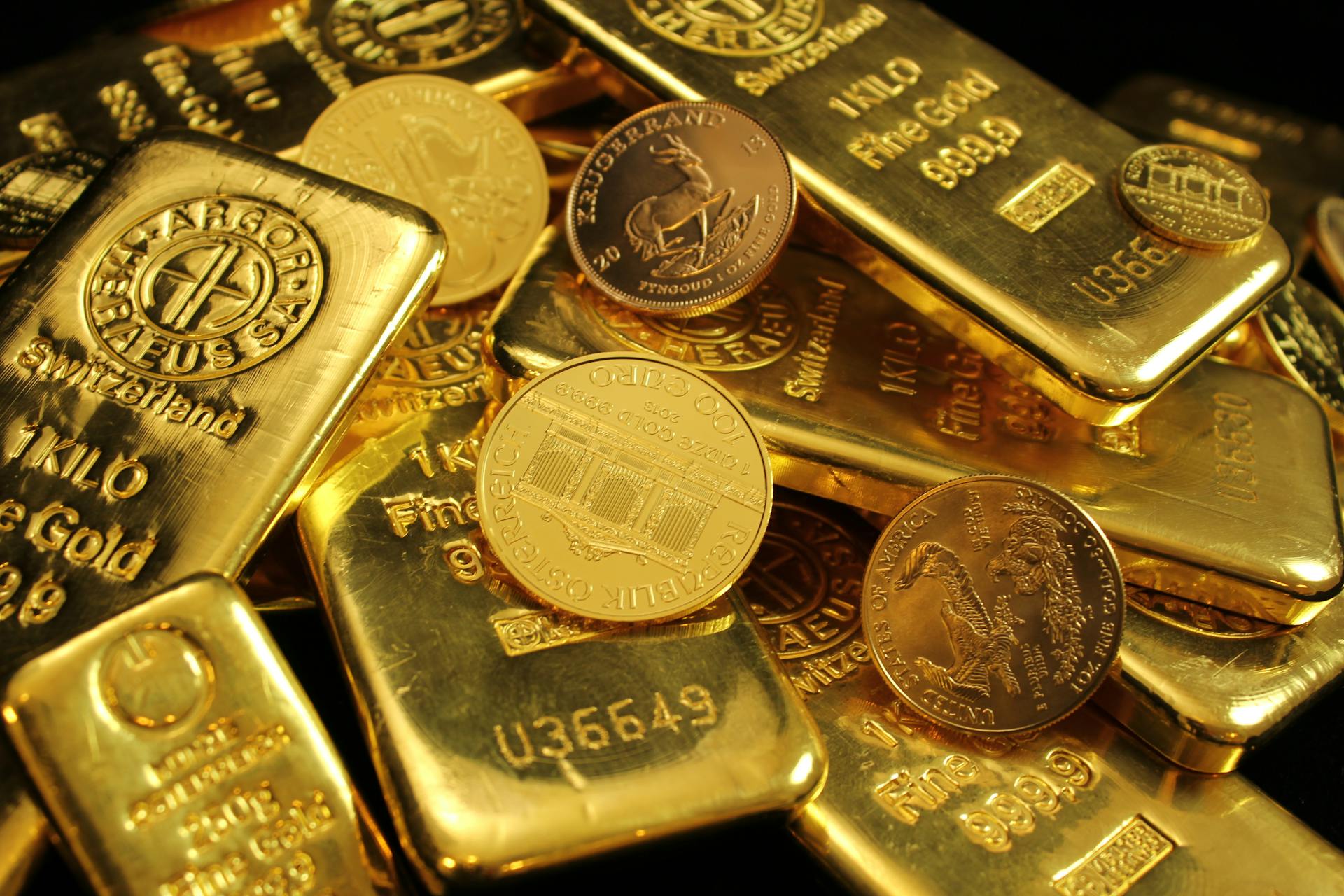
Whether Costco charges sales tax on gold bars depends entirely on your state. About 44 states exempt gold bullion from sales tax. Only a handful — Vermont, Maine, Maryland, Hawaii, Washington (as of 2026), and D.C. — still tax precious metals purchases. California exempts bullion purchases over $2,000 — and since Costco gold bars typically exceed this threshold, most California buyers pay no sales tax.
This article contains affiliate links. See our affiliate disclosure.
- About 44 states exempt gold bullion from sales tax — Costco collects whatever your state requires
- California exempts bullion purchases over $2,000 (Costco bars qualify at ~$2,600+)
- If you DO pay sales tax, it adds to your cost basis, reducing capital gains later
- Maryland reimposed sales tax on gold in July 2025 — check for recent changes in your state
Costco has become one of the most popular places to buy gold bars in America. The retailer regularly sells 1-ounce gold bars from PAMP Suisse and other mints, often selling out within hours. But one question comes up almost every time: does Costco charge sales tax on gold?
The answer depends on where you live. Costco does not set its own sales tax policy on gold — it follows state law, just like any other retailer. That means your state’s rules on precious metals sales tax determine what you pay at checkout.
Does Costco Charge Sales Tax on Gold?
Let’s clear up a common misconception: Costco does not decide whether to charge sales tax on gold bars. Sales tax is set by state legislatures, and Costco is legally required to collect it wherever applicable. The retailer has no discretion here.
The good news is that the vast majority of U.S. states have passed legislation exempting gold bullion, silver bullion, and other precious metals from sales tax. These exemptions reflect a growing recognition that precious metals function as a form of savings or investment, not ordinary consumer goods. As of 2026, approximately 44 states exempt gold bullion from sales tax in some form — through either a specific precious metals exemption or by having no state sales tax at all.
When you buy a gold bar from Costco online, the company calculates sales tax based on the shipping address. For in-warehouse purchases, tax is based on the store’s location. If your state exempts bullion, you’ll see $0.00 in sales tax on your Costco receipt. If your state taxes precious metals, you’ll see the applicable state and local rate applied to the full purchase price — which, on a $2,600+ gold bar, can add $130 to $230 or more to your total cost.
States Where Costco Gold Is Tax-Free
The majority of states exempt gold bullion from sales tax. This table groups states into three categories: states with a specific precious metals exemption, states with no sales tax at all, and states with a conditional exemption (like a minimum purchase threshold).
| Category | States | Notes |
|---|---|---|
| Full exemption | Alabama, Arizona, Arkansas, Colorado, Connecticut, Florida, Georgia, Idaho, Illinois, Indiana, Iowa, Kansas, Kentucky, Louisiana, Michigan, Minnesota, Mississippi, Missouri, Nebraska, Nevada, New Jersey, New Mexico, North Carolina, North Dakota, Ohio, Oklahoma, Pennsylvania, Rhode Island, South Carolina, South Dakota, Tennessee, Texas, Utah, Virginia, West Virginia, Wisconsin, Wyoming | Gold bullion is fully exempt from state sales tax regardless of purchase amount |
| No state sales tax | Alaska, Delaware, Montana, New Hampshire, Oregon | These states have no general sales tax, so gold is not taxed by default. Note: Alaska allows local sales taxes in some municipalities. |
| Conditional exemption | California | Exempt when the total sale of bullion and coins exceeds $2,000 per transaction (Cal. Rev. & Tax. Code §6355) |
If you live in any of the states listed above, your Costco gold bar purchase will not include sales tax (assuming you meet California’s threshold, if applicable). This covers roughly 43 states with specific exemptions plus 5 states with no sales tax, leaving only about 6 jurisdictions that still impose sales tax on gold.
Many of these exemptions were passed or expanded in recent years. The trend has been strongly in favor of exemption: since 2010, more than 15 states have added or broadened their precious metals sales tax exemptions. The Sound Money Defense League and other advocacy groups have pushed state legislatures to treat gold and silver as money rather than consumer goods, and the movement has been broadly successful.
States Where You Will Pay Sales Tax on Costco Gold
A small number of states still impose full sales tax on gold bullion purchases. If you live in one of these states and buy a Costco gold bar, expect to pay state and potentially local sales tax on the full purchase price.
| State | Approximate Sales Tax Rate | Estimated Tax on $2,700 Gold Bar |
|---|---|---|
| Vermont | 6.0% | ~$162 |
| Maine | 5.5% | ~$149 |
| Maryland | 6.0% | ~$162 |
| Hawaii | 4.0–4.5% (general excise tax) | $108–$122 |
| Washington | 7.5–10.5% (state + local, effective Jan 1, 2026) | $203–$284 |
| Washington, D.C. | 6.0% | ~$162 |
Washington state is the newest addition to this list. The exemption repeal took effect January 1, 2026, making all precious metals sales subject to full retail sales tax plus B&O tax. Combined state and local rates in Washington typically range from 7.5% to over 10%, making it one of the most significant tax impacts on a single gold bar purchase.
Hawaii’s general excise tax (GET) also applies to gold bullion sales. Unlike a traditional sales tax, Hawaii’s GET is technically imposed on the seller, but it is almost universally passed through to buyers. The base state rate is 4%, with an additional 0.5% surcharge in Honolulu County.
Note: New Mexico, Mississippi, Wisconsin, and New Jersey have all enacted precious metals exemptions in recent years and no longer tax gold bullion purchases.
If you live in one of these states, there is a silver lining: the sales tax you pay on your gold purchase becomes part of your cost basis, which reduces your taxable gain when you eventually sell. More on that below.
California: The $2,000 Threshold
California deserves special attention because it has a conditional exemption rather than a blanket one. Under California Revenue and Taxation Code §6355, sales of “monetized bullion, nonmonetized gold or silver bullion, or numismatic coins” are exempt from sales and use tax only when the total amount of the sale exceeds $2,000.
This threshold is measured per transaction, not per item. So if you buy a single 1-ounce gold bar from Costco for approximately $2,600–$2,800 (depending on the current spot price), the entire purchase is exempt because it exceeds the $2,000 threshold. You pay zero California sales tax.
However, if you were to buy a smaller item — say, a fractional gold coin or a silver round — for under $2,000, the full California state and local sales tax would apply. Combined rates in California range from 7.25% to over 10.25% depending on the county and city, which could add $145 to $205 in tax on a $2,000 purchase.
For Costco buyers specifically, the $2,000 threshold is rarely an issue. Costco’s standard 1-ounce gold bars have consistently been priced above $2,000 since the company began selling them in 2023. As gold prices have risen, the typical Costco gold bar now sells for $2,600 or more, well above the exemption threshold. If you are buying a single 1-ounce bar or multiple bars in one transaction, you will almost certainly qualify for the exemption.
One edge case to watch: if Costco ever offers fractional gold products (such as 1/4 ounce bars) priced below $2,000 individually, and you purchase only one, the exemption would not apply. In that scenario, you’d pay full California sales tax on the purchase.
Recent Changes: Maryland and Washington
Sales tax laws on precious metals are not static. Two notable changes in 2025–2026 illustrate why it’s important to verify current rules before making a purchase.
Maryland had exempted gold and silver bullion from sales tax starting in 2023, but the state legislature allowed the exemption to sunset in July 2025. As of that date, Maryland reimposed its 6% sales tax on precious metals purchases, including gold bars sold by Costco. On a $2,700 gold bar, that’s an additional $162 in tax that Maryland buyers did not pay in prior years. Advocacy groups have pushed for reinstatement of the exemption, but as of early 2026, it has not been restored.
Washington State reimposed sales tax on precious metals effective January 1, 2026, under Engrossed Substitute Senate Bill 5794 (Chapter 423, Laws of 2025). Washington’s combined state and local sales tax rates are among the highest in the nation, ranging from 7.5% to over 10% depending on the jurisdiction. A Costco gold bar purchased in Washington now carries significant sales tax that was previously exempt.
These changes highlight an important point: even if your state currently exempts gold from sales tax, that exemption can expire or be repealed. Always verify your state’s current law before assuming your purchase will be tax-free. Your state’s department of revenue website is the most reliable source.
Sales Tax Adds to Your Cost Basis
If you do pay sales tax on a Costco gold bar, there is an upside: it increases your cost basis in the asset. Under Treas. Reg. §1.263(a)-1(e), sales tax paid in connection with the acquisition of property is treated as part of the cost of that property. This means the tax you paid at purchase reduces your taxable gain when you eventually sell.
For example, suppose you buy a Costco gold bar for $2,700 and pay $162 in Vermont sales tax (6%). Your total cost basis is $2,862, not $2,700. If you later sell the gold for $3,500, your taxable gain is $3,500 − $2,862 = $638, rather than $800. At the 28% collectibles capital gains rate, that $162 in sales tax saves you approximately $45 in federal capital gains tax.
The savings are modest compared to the upfront tax cost, but they are real and should not be overlooked. Make sure to keep your Costco receipt showing the sales tax paid — you’ll need it to support your cost basis if the IRS ever questions your return. For a complete guide to everything that counts toward cost basis, see our cost basis guide for collectors.
This principle applies to all acquisition costs: shipping fees, insurance during transit, and any buyer’s premium at auction all add to your basis. Sales tax is just one component, but for gold buyers in taxed states, it can be a meaningful one.
After You Buy: The Capital Gains Side
Sales tax is only part of the tax picture for Costco gold buyers. When you eventually sell your gold bar at a profit, you’ll owe federal capital gains tax. Gold is classified as a “collectible” under IRC §408(m)(2), which means long-term gains are taxed at a maximum rate of 28% — higher than the 20% maximum rate that applies to stocks and bonds. Short-term gains (on gold held one year or less) are taxed as ordinary income at your marginal rate.
For a detailed walkthrough of how Costco gold bar sales are taxed — including examples, holding period rules, and reporting on Form 8949 — see our comprehensive Costco gold bar capital gains tax guide. You can also use our collectibles tax calculator to estimate your federal and state tax on a gold sale.
Filing state returns? E-file.com offers $10 off state filings with code “10OFFSTATE”. FreeTaxUSA
charges just $14.99 per state return.
Estimate your gold bar tax
Enter your purchase price, holding period, state, and income — see your estimated capital gains tax in seconds.
Open the Calculator →Frequently Asked Questions
Costco collects whatever sales tax your state requires. About 42 states exempt gold bullion from sales tax. States like New Mexico, Vermont, Maine, and Hawaii still charge sales tax on precious metals. Costco has no discretion here — it follows state law just like any other retailer.
California exempts gold bullion and coins from sales tax when the total transaction exceeds $2,000. Since Costco gold bars typically cost over $2,600, most California buyers pay no sales tax. Purchases under $2,000 are subject to state and local sales tax, which can range from 7.25% to over 10.25%.
About 44 states exempt gold bullion from sales tax through specific precious metals exemptions. Additionally, Alaska, Delaware, Montana, New Hampshire, and Oregon have no state sales tax at all. Only about 6 jurisdictions — Vermont, Maine, Maryland, Hawaii, Washington, and D.C. — still charge sales tax on gold purchases as of 2026.
Yes. Sales tax paid on a gold purchase adds to your cost basis under Treas. Reg. §1.263(a)-1(e). A higher cost basis means a lower taxable gain when you sell, reducing your capital gains tax. Keep your purchase receipt showing the sales tax paid.
In most states, yes. The same sales tax exemptions that apply to gold bullion typically cover silver, platinum, and palladium bullion and coins. Check your state’s specific definitions, as some exemptions only apply above certain purity thresholds (e.g., .900 fineness or higher).
Ready to File Your Gold Sale?
Tax software that handles Schedule D and Form 8949 for collectibles:
Compare all tax software options · Estimate your tax first
Affiliate links — we may earn a commission at no cost to you. Disclosure