
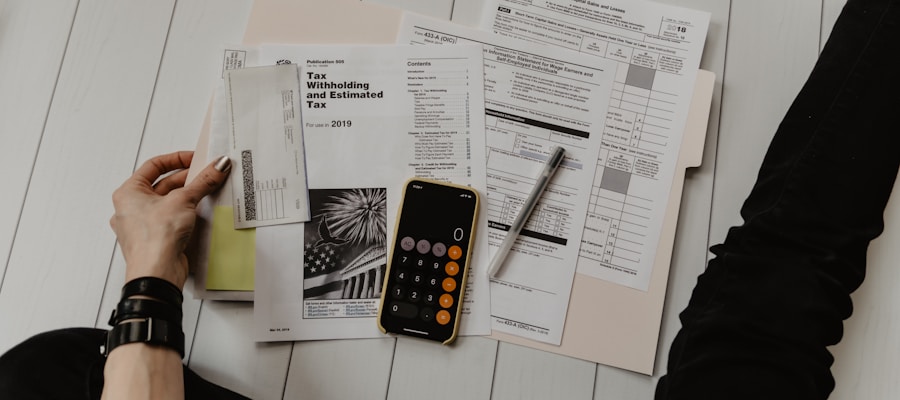
Since January 1, 2018, IRC §1031 like-kind exchanges are restricted to real property only. The Tax Cuts and Jobs Act of 2017 eliminated the ability to defer capital gains by exchanging one collectible for another of the same type.
- IRC §1031 like-kind exchanges no longer apply to collectibles as of January 1, 2018
- The Tax Cuts and Jobs Act of 2017 (§13303) restricted §1031 to real property only
- Exchanging one collectible for another is now treated as a taxable sale plus a separate purchase
- Long-term gains on collectibles are subject to the 28% maximum rate under IRC §1(h)
This article contains affiliate links. See our affiliate disclosure.
For decades, collectors used IRC §1031 like-kind exchanges to defer capital gains taxes when swapping one collectible for another of the same type. A coin dealer could exchange gold coins for other gold coins, an art collector could trade one painting for another, and a stamp collector could swap one collection for a different collection — all without recognizing gain at the time of the exchange. This mechanism, which existed in the tax code since the Revenue Act of 1921, allowed the deferral of gains indefinitely through successive exchanges. That changed permanently on January 1, 2018, when the Tax Cuts and Jobs Act of 2017 took effect. This article explains what §1031 was, how it applied to collectibles, what the TCJA changed, and how collectible exchanges are taxed under current law.
What Was a 1031 Like-Kind Exchange?
A like-kind exchange under IRC §1031 was a provision of the Internal Revenue Code that allowed a taxpayer to exchange one property for another property of a “like kind” without recognizing gain or loss at the time of the exchange. The gain was not eliminated — it was deferred. The taxpayer’s basis in the relinquished property carried over to the replacement property, meaning the deferred gain would be recognized when the replacement property was eventually sold in a taxable transaction.
The concept of “like kind” for personal property was interpreted under Treas. Reg. §1.1031(a)-2. Personal property had to be exchanged for property of the same “class” — within the same “General Asset Class” or “Product Class” as defined in the Standard Industrial Classification (SIC) system. For collectibles specifically, the IRS generally required that the exchanged items be of the same type or nature: paintings for paintings, gold coins for gold coins, stamps for stamps.
Under Treas. Reg. §1.1031(a)-2(c)(1), personal property of a “like class” was property of the same general nature or character, not necessarily the same grade or quality. In practice, this meant a rare first-edition painting could be exchanged for a different painting without triggering gain, but a painting could not be exchanged for gold coins because they were different classes of collectibles.
The like-kind exchange mechanism was particularly significant for high-value collectibles. A collector who acquired a painting for $10,000 that appreciated to $100,000 could exchange it for a different painting of equal value without paying tax on the $90,000 gain. The $10,000 basis from the original painting carried over to the new painting. If the collector later sold the new painting for $150,000, the entire $140,000 gain ($150,000 minus the $10,000 carryover basis) would be recognized at that point.
Multi-party exchanges were also permitted through qualified intermediaries under the “deferred exchange” rules of Treas. Reg. §1.1031(k)-1. A collector did not need to find a single counterparty willing to swap directly. A qualified intermediary could facilitate a multi-party transaction, subject to strict timelines: the replacement property had to be identified within 45 days and the exchange completed within 180 days.
What Changed in 2018
Section 13303 of the Tax Cuts and Jobs Act of 2017 (Public Law 115-97), enacted December 22, 2017, amended IRC §1031 by restricting like-kind exchanges to “real property” only. The amended statute reads: “No gain or loss shall be recognized on the exchange of real property held for productive use in a trade or business or for investment if such real property is exchanged solely for real property of like kind which is to be held either for productive use in a trade or business or for investment.”
The critical change was the insertion of the word “real” before “property” throughout the statute. Prior to the TCJA, §1031 referred to “property” without the real property limitation. The amendment became effective for exchanges completed after December 31, 2017 — meaning any exchange of personal property, including all collectibles, that was not completed by December 31, 2017, could not qualify for §1031 deferral.
The legislative purpose, as stated in the conference report (H.R. Rep. No. 115-466), was revenue generation. The Joint Committee on Taxation estimated that limiting §1031 to real property would raise approximately $31 billion over ten years. The elimination of personal property exchanges — including collectibles, equipment, vehicles, aircraft, and all other tangible personal property — was part of the broader TCJA restructuring of the tax code.
Unlike several other TCJA provisions that are scheduled to sunset after 2025 (such as the individual income tax rate reductions and increased standard deduction), the amendment to §1031 was enacted as a permanent change to the Internal Revenue Code. There is no expiration date. The restriction of §1031 to real property remains in effect unless and until Congress passes new legislation amending the provision.
How Collectible Exchanges Are Taxed Now
Under current law, when a collector exchanges one collectible for another, the transaction is treated as two separate events for tax purposes: (1) a sale of the relinquished collectible at its fair market value, and (2) a purchase of the received collectible at its fair market value. The collector must recognize any gain on the relinquished item at the time of the exchange.
The gain is calculated as the fair market value of the property received minus the collector’s adjusted basis in the property relinquished. If the collectible was held for more than one year, the gain is a long-term capital gain subject to the maximum 28% collectibles rate under IRC §1(h). If held for one year or less, the gain is short-term and taxed as ordinary income at rates up to 37%.
Worked Example: Collectible Exchange Under Current Law
| Original painting purchased for (basis) | $10,000 |
| Fair market value of sculpture received in exchange | $25,000 |
| Recognized gain ($25,000 − $10,000) | $15,000 |
| Tax rate (long-term collectible, maximum) | 28% |
| Maximum federal tax on the exchange | $4,200 |
Pre-2018, this exchange would have deferred the entire $15,000 gain under §1031. Under current law, the $15,000 gain is recognized in the year of the exchange. The collector’s basis in the sculpture is $25,000 (its fair market value at the time of the exchange).
The collector’s basis in the newly acquired collectible is its fair market value at the time of the exchange. In the example above, the collector’s basis in the sculpture is $25,000. If the sculpture later appreciates to $40,000 and is sold, the gain on that subsequent sale is $15,000 ($40,000 minus $25,000 basis).
This treatment applies regardless of how the exchange is structured. Whether two collectors trade items directly, whether a dealer accepts a trade-in, or whether items are swapped at a card show, coin show, or art fair, the tax treatment is the same: each party is treated as having sold the relinquished item and purchased the received item at fair market value. Both parties report their respective gains (or losses) on Form 8949 and Schedule D.
Common Misconceptions
Several persistent myths surround §1031 and collectibles. Understanding what the law states helps clarify these misconceptions.
Myth: Coins exchanged for coins of the same type still qualify. This is incorrect. Prior to 2018, exchanging gold coins for other gold coins of similar type could qualify as a like-kind exchange under the personal property rules of Treas. Reg. §1.1031(a)-2. Since January 1, 2018, no exchange of coins — regardless of type, metal content, or numismatic classification — qualifies for §1031 deferral. The amended statute requires real property, and coins are personal property.
Myth: The TCJA changes to §1031 will sunset after 2025. This is incorrect. While several individual tax provisions in the TCJA are scheduled to expire after December 31, 2025, the amendment restricting §1031 to real property was enacted as a permanent change to the Internal Revenue Code. There is no sunset provision. The §1031 limitation remains in effect indefinitely unless Congress passes new legislation.
Myth: Trades at card shows and coin shows are not taxable events. Every exchange of one collectible for another is a taxable event under current law, regardless of venue. When two collectors trade cards at a card show, both parties are treated as having sold the relinquished card at fair market value and purchased the received card at fair market value. If either party has a gain (fair market value of item received exceeds basis in item relinquished), that gain is taxable. The informal nature of the exchange does not change the tax treatment.
Myth: Small trades are exempt from reporting. There is no de minimis exception for collectible exchanges. Under IRC §61, all income from whatever source derived is includable in gross income. A $50 gain on a card trade is subject to the same reporting requirements as a $50,000 gain on a painting exchange. The legal obligation to report the gain exists regardless of the dollar amount.
Transitional Rules
The TCJA included a transitional rule for exchanges of personal property that were in progress when the law took effect. Under TCJA §13303(c)(2), if a taxpayer had disposed of personal property in a like-kind exchange before January 1, 2018, the exchange could still qualify for §1031 treatment even if the replacement property was not received until after December 31, 2017 — provided the exchange was completed within the standard 180-day exchange period.
Specifically, the transitional rule applied to exchanges where the relinquished property was transferred on or before December 31, 2017, and the replacement property was received within the 180-day exchange period (which could extend into 2018). This allowed taxpayers who had already initiated an exchange to complete it under the pre-TCJA rules.
These transitional rules have long since expired. No new like-kind exchanges of personal property, including collectibles, can be initiated or completed under §1031. Any exchange of collectibles occurring in 2026 is governed entirely by post-TCJA law and is treated as a taxable sale and purchase.
Tax software like E-file.com and FreeTaxUSA
handle Schedule D and Form 8949 reporting for collectible sales.
Frequently Asked Questions
No. Since January 1, 2018, IRC §1031 like-kind exchanges are restricted to real property only. The Tax Cuts and Jobs Act of 2017 (§13303) eliminated the ability to defer gains on exchanges of personal property, including all collectibles. Exchanging one collectible for another is treated as a taxable sale and a separate purchase.
Prior to 2018, IRC §1031 permitted tax-deferred exchanges of like-kind personal property, including art-for-art, coins-for-coins, and other collectible swaps. The TCJA removed personal property from §1031 eligibility effective January 1, 2018. Exchanging one collectible for another is now treated as two separate transactions: a sale and a purchase, each at fair market value.
Yes. The TCJA limitation of §1031 to real property was enacted as a permanent amendment to the Internal Revenue Code. Unlike other TCJA provisions that expire after 2025, the §1031 change has no sunset date. Congress would need to pass new legislation to restore personal property eligibility.
When a collector exchanges one collectible for another, the IRS treats it as two separate transactions: a sale of the relinquished item at fair market value, and a purchase of the received item at fair market value. Any gain on the deemed sale is subject to the 28% maximum collectibles rate under IRC §1(h) if held over one year, or taxed as ordinary income if held one year or less.
Estimate your collectibles tax
Enter your purchase price, sale price, holding period, state, and income to see what the IRS collectibles rate means for your situation.
Open the Calculator →Filing Collectible Sales?
Tax software that handles Schedule D and Form 8949 for collectibles:
Compare all tax software options · Estimate your tax first
Affiliate links — we may earn a commission at no cost to you. Disclosure
✓ Tax analysis reviewed for accuracy · Sources verified against IRS.gov